Viktor Frankl wrote in Man’s Search for Meaning, “Those who have a ‘why’ to live, can bear with almost any ‘how.'”
The search for that “why” can feel exhilarating one week and exhausting the next. Most of us imagine purpose as a single, grand calling — a lightning-bolt moment that suddenly makes everything make sense. In reality, it rarely works that way. Purpose tends to show up in pieces, built slowly out of your experiences, your values, and the connections you make with the people around you. The path isn’t a straight line. There will be stretches of real clarity, and there will be stretches where everything feels foggy and purpose feels like something other people have figured out and you haven’t.
Why the Search for Purpose Feels So Isolating
When you’re in one of those foggy stretches — stuck, uncertain, unsure what direction to even move in — it’s easy to turn inward and try to think your way out of it alone. It can feel like finding purpose is a private puzzle you’re supposed to solve entirely inside your own head. But there’s a problem with that approach: the more time you spend turning the same thoughts over by yourself, the harder they can be to see clearly. Self-doubt creeps in. So does anxiety, and a low-grade sense of being adrift that’s hard to name but impossible to ignore.
This is exactly where conversation earns its place. Talking through your values, what genuinely energizes you, and the moments that make you feel most like yourself can surface patterns you’d never notice by only thinking about them. It’s a bit like holding a tangled thread — pull on it alone in frustration and you usually just tighten more knots. Hand it to someone else, and a different pair of hands and a different angle can loosen what you couldn’t.
Talking Isn’t a Sign of Weakness — It’s How Clarity Happens
Reaching out to a trusted friend, a mentor, a therapist, or a supportive listener when you’re feeling lost isn’t an admission of failure. It’s closer to the opposite — it takes a real amount of self-awareness to say “I don’t know what I’m doing with my life right now” out loud. The simple act of voicing what’s actually going on inside your head tends to bring an immediate sense of relief, almost before anyone responds. And often, the person listening doesn’t hand you an answer at all. What they offer instead is presence, a few well-placed questions, and a fresh set of eyes on a situation you’ve been staring at for too long. That combination is frequently enough to unlock a next step you couldn’t see on your own — a theme we go deeper on in The Power of Being Heard: Turning Heavy Moments Into Happy Stories.
7 Questions to Ask Yourself (or a Listener) When You Feel Stuck
If you’re not sure where to start, you don’t need a grand plan — you need a few honest questions and someone willing to sit with the answers alongside you. Try working through these out loud with someone rather than just in your head:
- What’s an activity that makes you lose track of time?
- When was the last moment you felt genuinely proud of yourself, and why?
- If money weren’t a factor, what would you spend your time doing?
- Whose life or work do you find yourself quietly admiring, and what part of it draws you in?
- What’s a problem in the world — big or small — that you can’t help but notice?
- What did you love doing as a kid, before anyone told you it wasn’t practical?
- What would you regret not trying if nothing changed five years from now?
None of these questions has one correct answer. What matters is saying your answers to another person and hearing how they sound out loud — that’s usually where the real clarity shows up.
Who Should You Actually Talk To?
Not every conversation needs to be with a therapist, and not every conversation needs to be with someone who’s known you for years, either. Sometimes the people closest to you are too close — too invested in the version of you they already know — to help you imagine a different one. That’s part of why finding people you can genuinely confide in matters so much, and why a neutral, judgment-free listener can sometimes get you further, faster, than someone who already has an opinion about who you’re supposed to be.
If you’ve been putting off these conversations because they feel too vulnerable to have with people in your everyday life, know that you don’t have to feel alone in that hesitation — plenty of people find it easier to think out loud with someone who isn’t tangled up in the rest of their life.
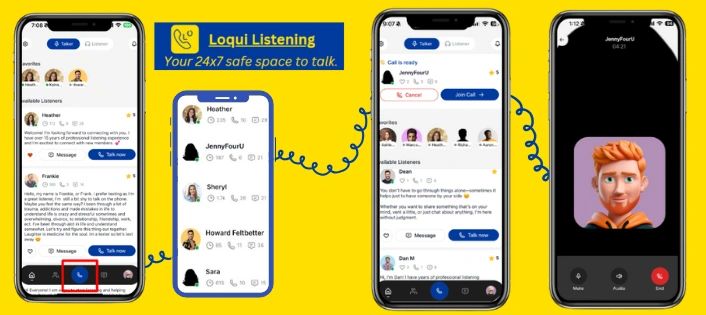
How Loqui Listening Can Help You Talk Through It
This is exactly the space Loqui Listening was built for. The app connects you with empathetic, trained listeners through phone calls, text chats, or voice notes — confidentially and anonymously, whenever you actually feel the need to talk, not just when it’s convenient to schedule. You don’t need a diagnosis or a crisis to use it. You just need a place to say the uncertain, half-formed thoughts out loud and have someone actually hear them. If you’re not sure where to begin, Where can I find someone to talk to right now? walks through exactly how to get started.
Frequently Asked Questions
What’s the fastest way to find your purpose in life?
There isn’t a genuine shortcut, but the fastest path is usually talking through your values and the moments that make you feel most alive with another person, rather than trying to reason your way to an answer alone. Conversation surfaces patterns that solo reflection tends to miss.
Can talking to a stranger really help me find purpose?
Yes — often more than talking to people who already know you well, because a stranger has no fixed idea of who you’re supposed to be. That’s part of the reasoning behind anonymous, judgment-free support: it removes the social pressure to give an answer that fits what people expect from you.
What if I still feel lost after talking to someone?
That’s normal, and it doesn’t mean the conversation failed. Purpose is rarely found in a single conversation — it’s built through several of them over time, plus the small actions you take in between. If the feeling of being stuck persists, that’s a sign to keep the conversation going, not to stop having it.
You Don’t Have to Sort This Out Alone
Finding purpose is a process of self-discovery, but self-discovery was never meant to happen in isolation. It’s about looking inward while also staying engaged with the world and the people in it. Don’t let the feeling of being stuck keep you quiet about it — conversation is one of the most reliable tools you have for clarity and forward movement. If you’re looking for more on building the kind of connection that supports that process, Presence Over Progress: Why Just Showing Up Is Enough and the rest of our blog are good places to keep exploring. Sharing your journey, even in small conversations, can illuminate the path ahead and remind you that you’re not searching for meaning by yourself.